Real vs Fake Luxury Watches: 10 Key Differences You Must Know Before Buying
The luxury watch market is booming—but so is the counterfeit industry. Real vs fake luxury watches are harder to spot than ever, with high-quality fakes making it difficult even for experienced buyers to tell the difference. Whether you're a collector, reseller, or first-time buyer, knowing how to identify fake luxury watches is essential to avoid costly mistakes.
In this guide, we’ll break down 10 key differences between real and fake luxury watches, helping you confidently spot counterfeit pieces and make informed purchases.
Why Spotting Real vs Fake Luxury Watches Matters
Buying a luxury watch is a significant investment. Unfortunately, the market is flooded with counterfeit models, and even seasoned buyers can fall for a convincing fake. Understanding the key signs of authenticity will not only protect your investment but also ensure you enjoy the full value and craftsmanship of a genuine luxury watch.
By learning how to spot fake watches and compare them with authentic pieces, you can avoid scams and confidently navigate the world of real vs fake luxury watches. Whether it’s examining serial numbers, weight, craftsmanship, or packaging, every detail counts in distinguishing the real from the counterfeit.
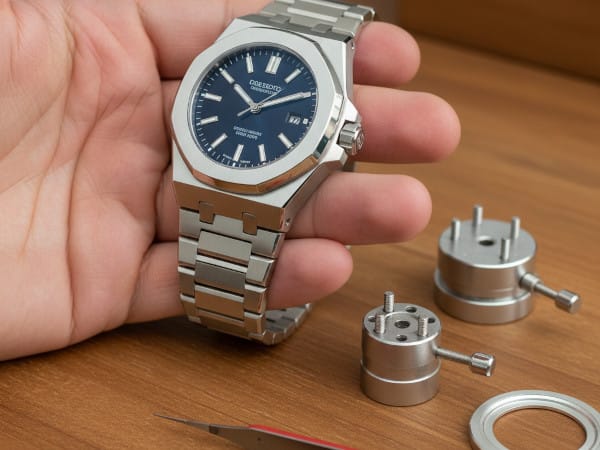
1. Weight & Materials
Luxury watches are crafted from premium materials like stainless steel, gold, platinum, or sapphire crystal.
- Real: Feels solid, dense, and well-balanced in the hand.
- Fake: Often lighter or flimsy due to cheaper metals or hollow construction.
⌚ Tip & Tools: Pay attention to how the watch feels when you hold it—if it feels too light, that’s a red flag. Use a watch holder or vise to keep it steady, and spring bar tools to safely remove or adjust the bracelet for inspection. Case back opener tools can also help check internal materials if needed, but for weight testing, simple handling is enough.
2. Movement (The Heart of the Watch)
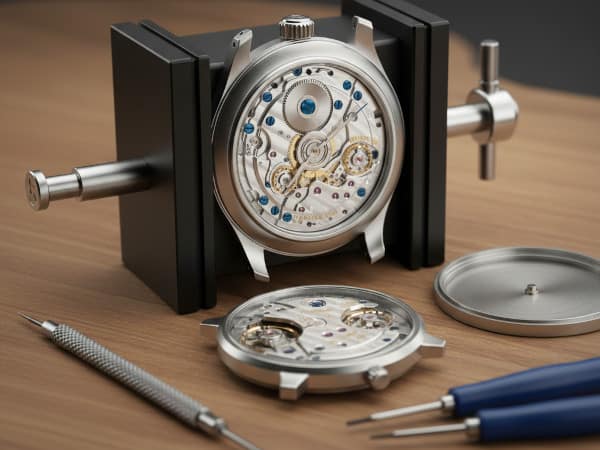
The movement powers a luxury watch and is a key sign of authenticity.
- Real: watches have a smooth, sweeping second hand and high-quality, decorated movements visible under the case back.
- Fake: watches often tick like a quartz and may have cheap, unbranded movements.
⌚ Tip & Tools: Check the second-hand sweep and listen for a soft, consistent hum; for deeper inspection, safely open the case back using a watch case opener, secure the watch in a holder, and use precision screwdrivers to examine the movement, engravings, and jeweled bearings.
3. Craftsmanship & Finishing
Luxury watches showcase flawless craftsmanship with polished surfaces, sharp engravings, and precise edges. Counterfeits often lack these fine details.
- Real: Authentic luxury watches have perfectly polished surfaces, sharp engravings, and clean, precise edges. Every detail reflects high-end craftsmanship.
- Fake: Counterfeit watches often show rough edges, blurry or misaligned engravings, and uneven finishing—small flaws that reveal a fake.
⌚ Tip & Tools: Inspect the watch closely using a 10x or 20x Loupe or magnifying glass under bright light. Check the polish, engravings, and surface smoothness—tiny imperfections can indicate a fake.


4. Dial Details & Printing
The dial is one of the easiest places to spot a fake, as luxury brands maintain extremely high standards in printing and finishing.
- Real: Crisp, sharp text with perfect spacing; logos and markers are precisely aligned and flawless.
- Fake: Blurry or uneven printing, misaligned logos, and visible imperfections on markers or text.
⌚ Tip & Tools: Carefully examine the dial under good lighting—any tiny flaw, such as uneven spacing or smudged text, is a warning sign. Use a watch holder to keep the watch steady and spring bar tools to remove the bracelet for better handling if needed. A magnifier or loupe is highly recommended to spot fine details that are not visible to the naked eye.

5. Serial Numbers & Production Dates
Luxury watches have a unique serial number tied to their production year, one of the first things checked for authenticity.
- Real: The serial is clean, deep, and matches the brand’s font, placement, and production year.
- Fake: Fakes often have shallow, uneven, or wrong serials, sometimes repeated on multiple watches or mismatched with the model.
⌚ Tip & Tools: Always inspect the serial number carefully to ensure it’s clean, deep, and matches the watch’s model and production year. Use a loupe to check engraving quality, and consult official brand databases or authorized dealers to verify authenticity. To safely access hidden serials, remove the strap with spring bar tools and hold the watch securely with a vise holder. If needed, open the case back carefully using a case back opener—these tools prevent scratches and allow you to inspect movement or hidden serials safely.

6. Model Numbers
Every luxury watch has a specific model number that defines its design, materials, and features.
- Real: Clearly engraved, precise, and matches the watch’s exact model and specifications.
- Fake: Missing, incorrect, or does not match the watch’s design or details.
⌚ Tip & Tools: Check the model number under good lighting—authentic watches have precise, clean engravings that match the official model. Use a watch holder for stability and spring bar tools to remove the bracelet if needed. A magnifier or loupe helps read fine details, and case back openers can access internal markings safely. Always verify the number with the brand’s database or an authorized dealer.
7. Caseback Authenticity
A common mistake by counterfeiters is over-decorating the caseback.
- Real: Most authentic luxury watches have casebacks that match the brand’s design—often plain or minimally marked. Any markings are consistent with the model and production year.
- Fake: Counterfeit watches often feature unnecessary engravings, clear exhibition windows, or stamps that the genuine brand never uses. Over-decorated or inconsistent casebacks are a strong red flag.
⌚ Tip & Tools: Inspect the caseback closely with a loupe for depth, font, and finish. Remove the strap safely with spring bar tools, secure the watch in a vise, and open the caseback using a Bergeon opener to examine the interior. This helps verify authenticity without damaging the watch.

8. Sound and Smoothness
Luxury watches are designed for smooth, almost silent operation. One of the easiest ways to check authenticity is by listening closely.
- Real: Authentic luxury watches have near-silent movement, with barely noticeable sound even in a quiet room.
- Fake: Counterfeit watches often produce a loud or uneven ticking noise, a clear sign of a low-quality movement.
⌚ Tip & Tools: Hold the watch close to your ear in a quiet environment to check for smooth operation. While listening, ensure the watch is securely held—use a vise holder if needed. If you need to remove the strap to get a better angle or inspect the movement, use spring bar tools and open the case carefully with a case back opener. Tools like watchmaker screwdrivers can also help for detailed inspections without scratching or damaging the watch.

9. Cyclops Lens
Many luxury watches, especially RoleZ, feature a Cyclops lens over the date window to magnify the date. This is one of the most commonly faked features in luxury watches.
- Real: The Cyclops lens magnifies the date clearly by 2.5x, making it easy to read without distortion.
- Fake: Counterfeit watches often have weak magnification, distorted numbers, or misaligned lenses.
⌚ Tip & Tools: Examine the date under bright light to check the magnification and clarity. For a closer inspection, remove the strap using spring bar tools and secure the watch in a vise holder. If needed, open the case back carefully with a case back opener to inspect the movement. Using a watchmaker’s screwdriver set can help adjust or inspect components safely without scratching the watch.

10. Luminescent Quality (The Lume)
Luxury watches use high-quality glow-in-the-dark materials like Chromalight or Super-LumiNova to ensure consistent visibility in the dark.
- Real: The lume is evenly applied, glows brightly, and lasts for hours after charging under light.
- Fake: Counterfeit watches often have patchy lume, inconsistent colors across markers, or a glow that fades quickly within minutes.
⌚ Tip & Tools: Charge the watch under bright light and check the glow in a dark room. Authentic luxury watches have even, long-lasting lume, while fakes fade quickly or glow unevenly. For close inspection, remove the strap with spring bar tools, hold the watch in a vise, and open the case back carefully with a Bergeon opener. Watchmaker screwdrivers help inspect safely without scratches.

Spot Real vs Fake Luxury Watches
Protect your investment by learning to spot real vs fake luxury watches. From weight and movement to dials, serial numbers, and lume, every detail counts. With the right tools and knowledge, you can confidently identify authentic watches and avoid costly mistakes.
Join PGO Academy’s Luxury Watch Authentication Workshops
Take your watch knowledge to the next level with PGO Academy’s hands-on Luxury Watch Authentication Workshops:
- 1 Day Luxury Watch Authentication Workshop – Quick, hands-on training for beginners and enthusiasts.
- 3 Days Advanced Luxury Watch Authentication Workshop – featuring hands-on sessions with top brands including Audemarx Piguex, Cartiex, Omegx, Richard Millix, Patek Philippx, and Rolez. Learn expert techniques to identify genuine luxury watches and spot fakes.
Both workshops are designed to give you the confidence and skills to authenticate luxury watches like a pro. Whether you want a concise introduction or a full deep-dive experience, PGO Academy equips you with everything you need to protect your investment.
Sign up for the 1 Day Workshop or 3 Days Workshop today and never get fooled by a fake luxury watch again!
Disclaimer: This article is for informational purposes only and does not constitute professional advice. Please refer to our Terms of Service for full details.